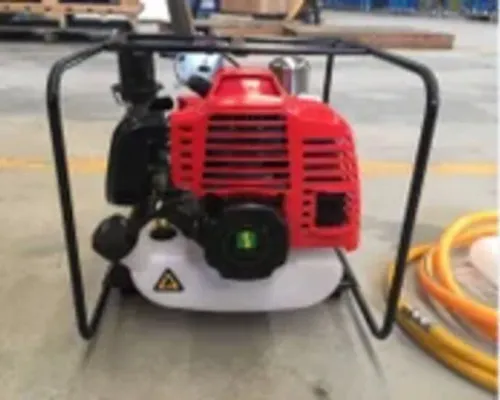
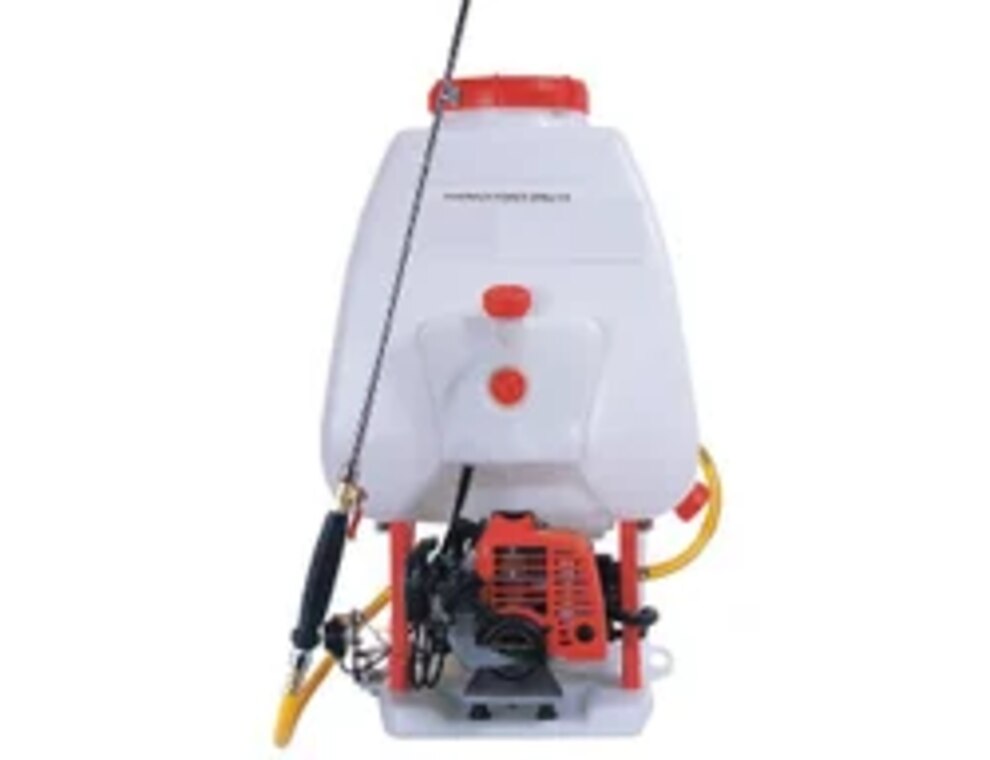
A knapsack sprayer must deliver the correct dose at the crop, not merely advertise a large tank, high pressure or a powerful engine. By the end, you will be able to calculate useful capacity, match pressure and nozzle choice to the job, compare engines and pumps, test carrying comfort, and question suppliers about performance and support.
Key takeaways
- Calculate tank capacity from treated area and application rate.
- Match pressure, flow and droplet size to the crop and spray task.
- Compare engine displacement with workload, terrain and expected operating time.
- Test the loaded harness, pump, hose and nozzle circuit before buying.
Choose Tank Capacity from the Job, Not the Label
Size knapsack sprayer tank capacity from the area you will treat before refilling, not from the label. Your application rate calculation is: application rate (L/ha) = 600 × flow (L/min) ÷ [speed (km/h) × effective width (m)].
Thus, a 20-litre tank does not guarantee a fixed 20 litre sprayer coverage; coverage depends on spray volume per hectare.
At 4 L/min, 3 km/h and a 1.5 m effective width, the rate is 600 × 4 ÷ (3 × 1.5) = 533 L/ha. That would be unsuitable for many field applications unless the nozzle, speed or width changes. Crop spacing, row length and the actual treated area determine effective width.
| Job condition | Capacity decision | Reason |
|---|---|---|
| Short rows with nearby water | Smaller useful tank | Less carrying weight and faster handling |
| Wide fields with distant refill points | Larger useful tank | Fewer interruptions |
| Narrow or irregular crop rows | Size for the measured swath | A nominal width can overstate coverage |
Treat nominal capacity as the label figure, not the working volume. Check foam allowance, low-level pickup, unusable heel and liquid needed to keep the pump primed on slopes; record the volume remaining when the pump first draws air.
Water availability and refill distance may justify extra capacity, but a full 20 litres adds about 20 kg before the tank, engine and fuel. Choose the largest load the operator can carry through one round without excessive fatigue, then verify that the tank fits the crop rows and refill routine.
Match Pressure, Flow and Droplet Size to the Crop
Application rate comes from nozzle flow, travel speed and effective spray width—not the pump’s maximum pressure: L/ha = 600 × flow (L/min) ÷ [speed (km/h) × width (m)]. For a fixed nozzle, raising pressure from 2 to 4 bar raises flow by about 41%, while producing finer droplets that evaporate faster and drift further.
Use nozzle selection to set spray reach and leaf coverage. Fine droplets cover contact-product targets well but are vulnerable to wind; coarse or very coarse droplets reduce drift but can leave poor coverage. Demand a droplet class or measured droplet spectrum, not “fine atomisation.”
| Pressure description | What it actually means | Procurement use |
|---|---|---|
| Pump pressure | Pressure at the pump outlet | Compare only with a measured nozzle reading |
| Bypass relief pressure | Setting that diverts excess flow back to the tank | Shows the protection limit, not field output |
| Dead-head pressure | Pressure with the trigger closed and flow stopped | Never treat it as working pressure |
| Lance or nozzle pressure | Pressure after hose, filter, valve and lance losses | Use this to judge application performance |
Request a pressure-versus-flow curve, or measure output with the actual hose, trigger, filter, lance and nozzle fitted. A gauge near the nozzle circuit is more useful than one at the pump because it captures line losses and pressure drop during spraying.
Piston pump versus diaphragm pump involves a chemical trade-off. Piston pumps provide compact high pressure but need protection from abrasive wettable powders and solvents; diaphragm pumps isolate the crankcase and suit aggressive formulations, at the cost of weight, pulsation and price.
- Confirm filtration and agitation for wettable powders, suspension concentrates and suspension fertilisers; poor mixing or a blocked filter changes flow and dose.
Compare Engine Type and Displacement by the Workload
A two-stroke versus four-stroke sprayer choice depends on terrain, spray distance and hours per round, not engine size alone. Compare cold starting, hot restarting, throttle response and sprayer fuel consumption with the pump operating at your intended pressure.
| Engine type | Practical advantage | Trade-off |
|---|---|---|
| Two-stroke | Correct petrol-to-oil fuel mixing; simple, light power-to-weight packaging; strong throttle response | More exhaust smell, noise and vibration; mixing errors damage the engine; runtime and operating cost depend on mixture and load |
| Four-stroke | Separate engine oil; no premixing; quieter exhaust and steadier long-run operation | Heavier; added oil, valve and service checks; starting and carrying effort can increase |
A 25cc 34cc 35cc 39cc engine comparison is useful only in context. A smaller engine suits short-distance, low-load spraying and reduces fatigue; 34cc or 35cc fits broader daily work, while 39cc helps sustain pressure through long hoses, uphill ground or tall-crop reach. Extra power also brings fuel use, heat, noise and vibration.
Engine displacement does not prove better nozzle performance. Pump design, relief setting, hose losses and the nozzle determine useful output. Ask for a timed test at the intended pressure, using the target formulation or a safe substitute, and record cold start, hot restart, throttle response and fuel use.
Choose the lightest engine that holds pressure without bogging.
Test the Full Load, Harness and Spray Circuit Before Buying
A filled-unit trial is the only reliable way to judge whether a knapsack sprayer will remain safe through a full round. Twenty litres of water adds about 20 kg before the tank, engine, fuel and chemical, so assess full-load sprayer weight rather than an empty catalogue unit.
Use this harness fitting checklist during the trial:
- Fit wide straps, lumbar or back support, and every adjustment range; confirm the load transfers to your hips.
- Walk, turn, lift, start and set down the machine without twisting under load.
- Check balance as the tank empties, recoil-starter access, throttle and pressure-control reach, hose routing, and clearance from your legs.
Good knapsack sprayer ergonomics prevent fatigue from becoming a handling failure.
For orchards and tall crops, test deposition inside the target canopy, not maximum pressure alone. Air-assisted spraying can improve penetration, but excessive air velocity increases drift and blows droplets through foliage.
Test these field outcomes:
| Test | Acceptable result | Warning sign |
|---|---|---|
| Full load | Stable, comfortable, controllable | Shoulder strain or twisting |
| Spray circuit | Pressure holds at the lance | Pressure falls under flow |
| Rinsing | Clean water reaches pump, hose, trigger and nozzle | Trapped formulation remains |
After draining, measure retained liquid in the sump and pickup. Check suction and pressure filter mesh, filter area, cleanability and pressure drop; a fine, undersized filter can starve the pump when dirty. Use ISO 19932 as the benchmark, examining leakage, structural integrity, pressure behaviour, harness protection and operator-contact provisions.
Compare Matching Models Through Evidence, Not Headline Numbers
A SAM CGX-35 versus HONDA GX-35 specification match does not establish equal field performance. Similar pressure, flow, tank capacity and engine displacement can conceal different pumps, seals, hose losses and nozzle behaviour.
| Evidence to request | Why it matters | Ask for |
|---|---|---|
| Engine | Displacement alone does not prove output | Maker and exact engine designation |
| Pump | Materials affect abrasion and chemical resistance | Pump material; piston or diaphragm construction |
| Circuit | Pump pressure can exceed lance pressure | Pressure versus flow curve at the nozzle circuit |
| Wear parts | Incompatible seals fail with formulations | Seal and hose compatibility |
| Spray quality | “Fine atomisation” says too little | Supplied nozzle, filter mesh and measured pattern |
| Support | Downtime can exceed the purchase saving | Sprayer warranty and spare parts, stock and service locations |
Require a demonstration with the intended nozzle, actual hose, trigger, filter and lance fitted. Use a formulation reflecting field use; for wettable powders, suspension concentrates or suspension fertilisers, let the mixture settle, then test agitation, blockage and output recovery.
Confirm whether pressure is measured at the pump, bypass relief, dead-head point or nozzle circuit. Measure pressure at the lance and repeat the test as the tank empties. Request written starting procedure, fuel mixture or oil grade, scheduled maintenance, noise limits and emissions obligations.
Importers of Agricultural Equipments add value when they provide model-specific parts identification, service access and measured demonstrations rather than catalogue figures. Use this agricultural sprayer buying checklist:
- Calibrated flow
- Nozzle pattern
- Pressure at the lance
- Useful tank capacity
- Full-load fit
- Residual liquid
- Support after purchase
Related products
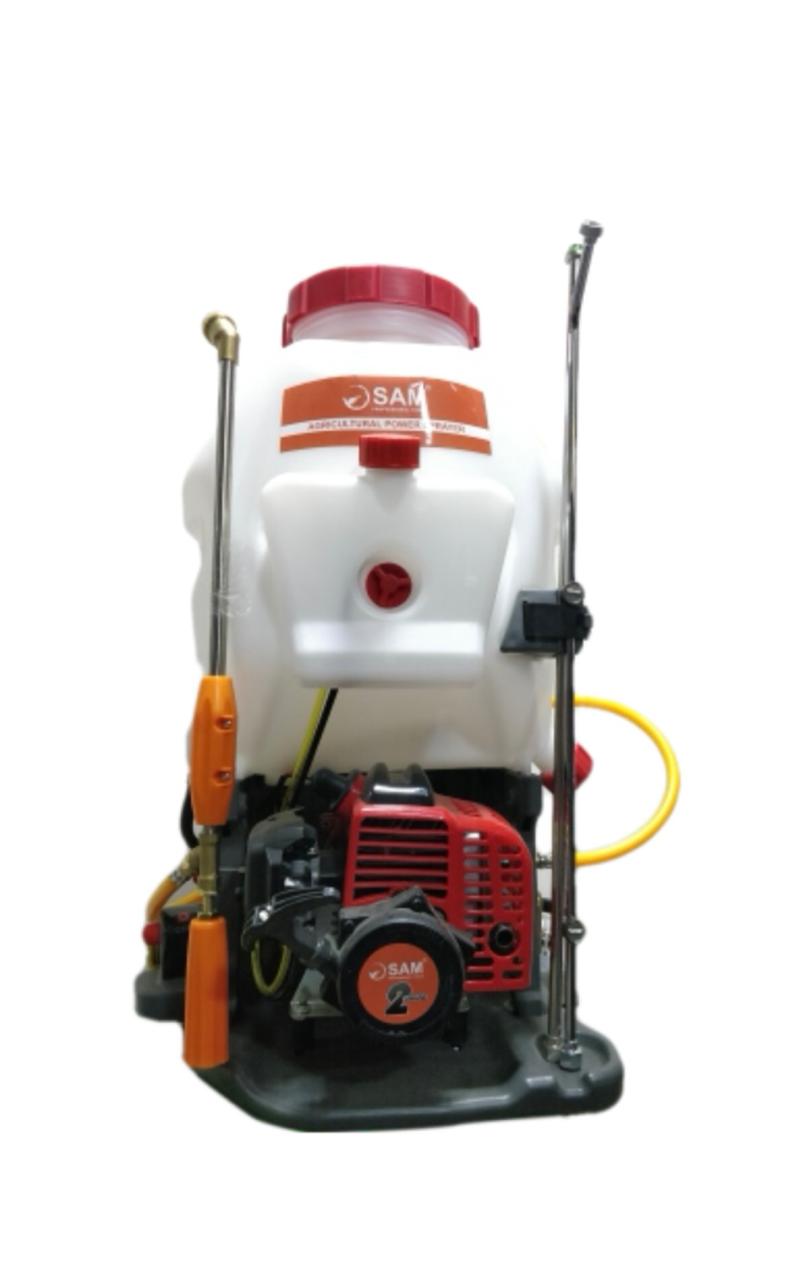 | KNAPSACK POWER SPRAYERS Engine Type: Air Cooled, 2 Stroke Engine Displacement: 34cc Tank Capacity: 20Ltr Discharge: 3-8Lpm Pressure: 15-25 Kg/cm² Weight: 10kg View product → |
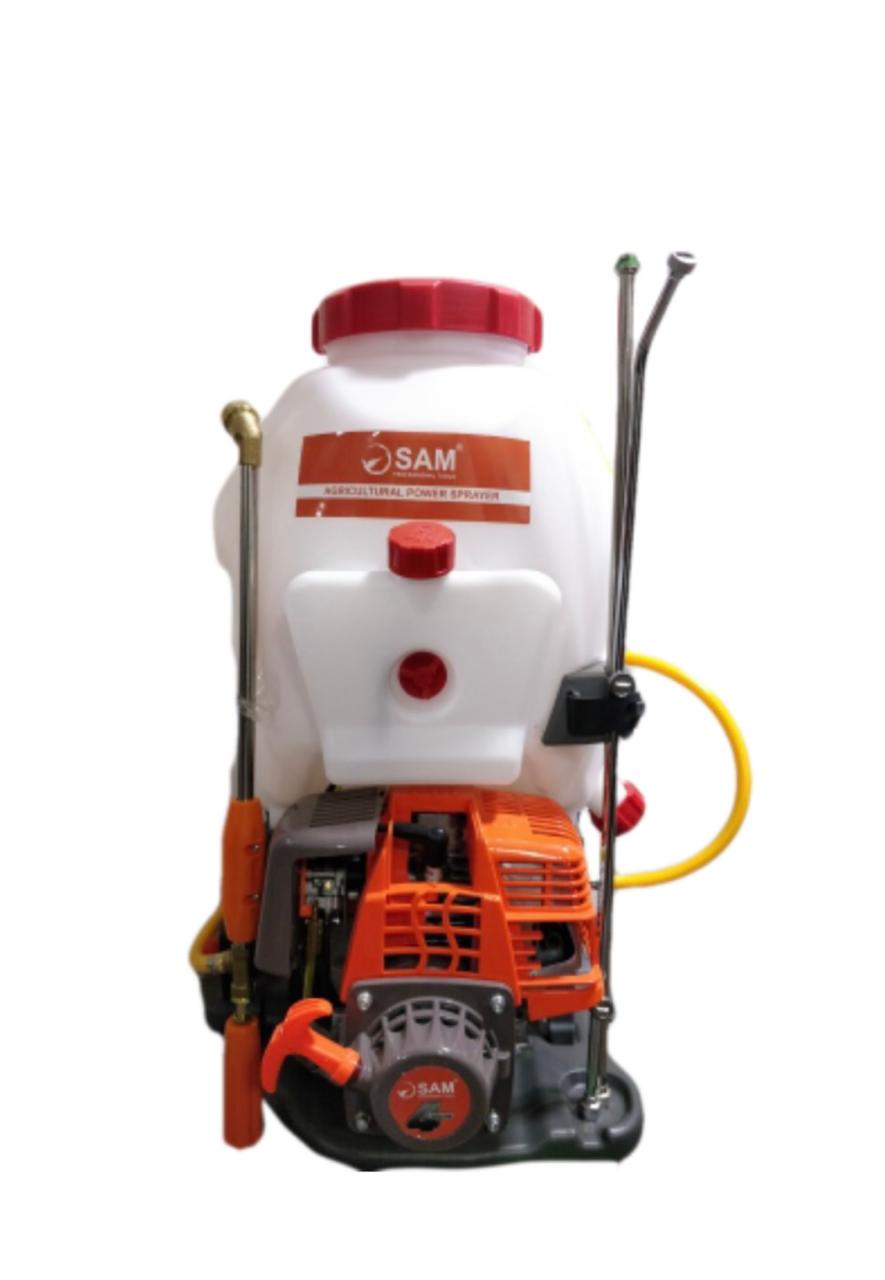 | KNAPSACK POWER SPRAYERS Engine Type: Air Cooled, 4 Stroke Engine Displacement: 39cc Tank Capacity: 20Ltr Discharge: 3-8Lpm Pressure: 15-25 Kg/cm² Weight: 11kg View product → |
Frequently asked questions
How do you choose the right knapsack sprayer tank capacity?
Calculate the area you will treat before refilling, then use application rate, flow, speed and effective spray width to select capacity.
How should pressure, flow and droplet size match the crop?
Choose pressure and flow for the nozzle and crop target, then confirm that the resulting droplet size supports coverage without excessive drift.
How do engine type and displacement affect sprayer selection?
Compare engine type and displacement with the workload, operating duration, terrain and pump demand rather than relying on displacement alone.
What should you test before buying a knapsack power sprayer?
Test the full tank, harness, pump, hose, trigger, pressure control and nozzle circuit for comfort, leaks and consistent spray output.
Related products
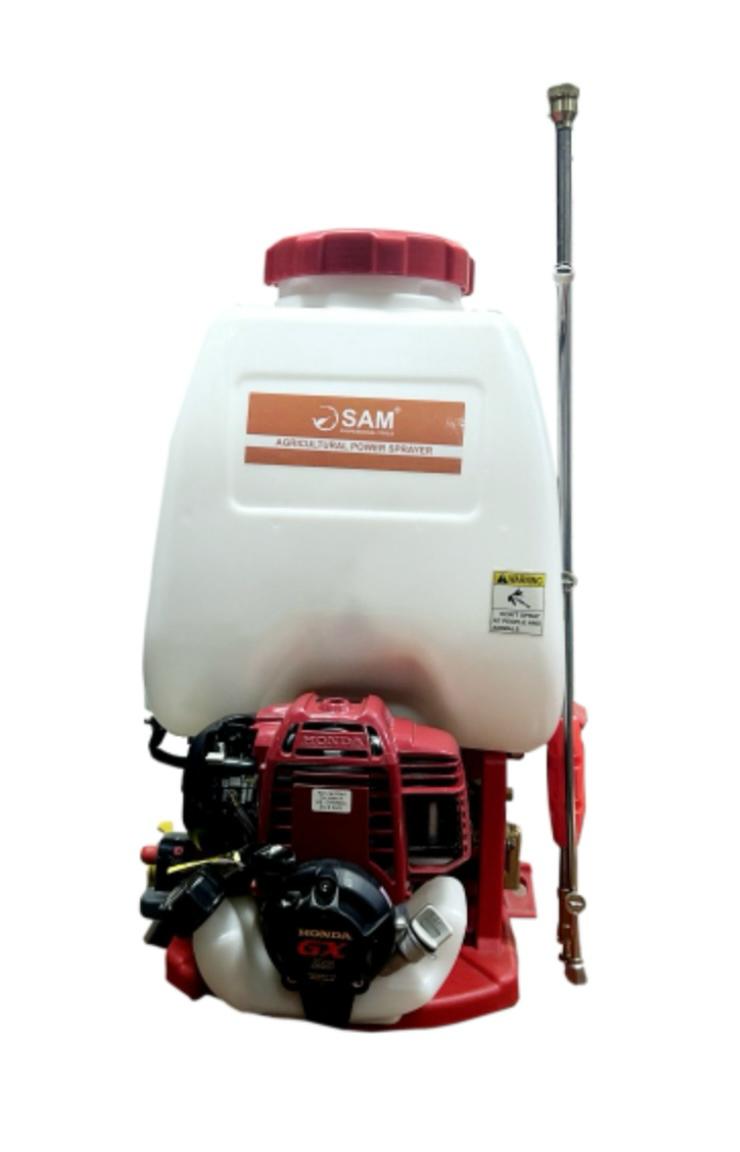 | KNAPSACK POWER SPRAYERS Engine Type: Air Cooled, 4 Stroke Engine Displacement: 35cc Tank Capacity: 20Ltr Discharge: 3-8Lpm Pressure: 15-25 Kg/cm² Weight: 11kg View product → |
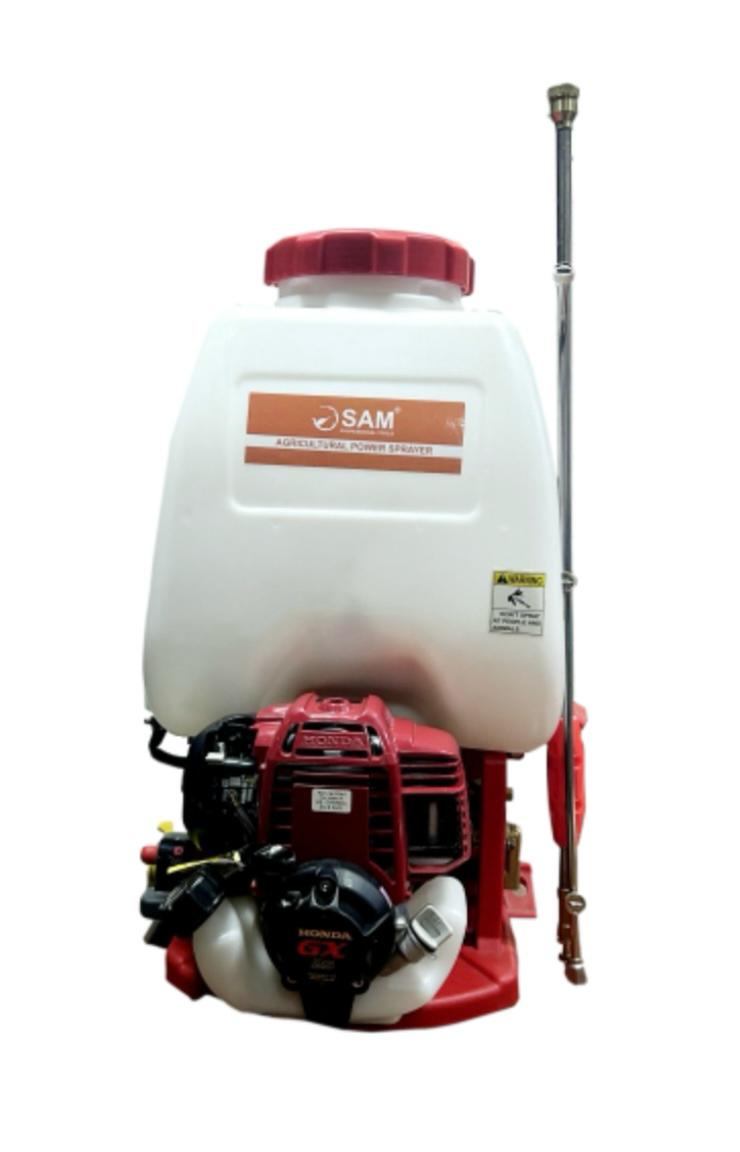 | HONDA KNAPSACK POWER SPRAYERS Engine Type: Air Cooled, 4 Stroke Engine Displacement: 35cc Tank Capacity: 20Ltr Discharge: 3-8Lpm Pressure: 15-25 Kg/cm² Weight: 11kg View product → |
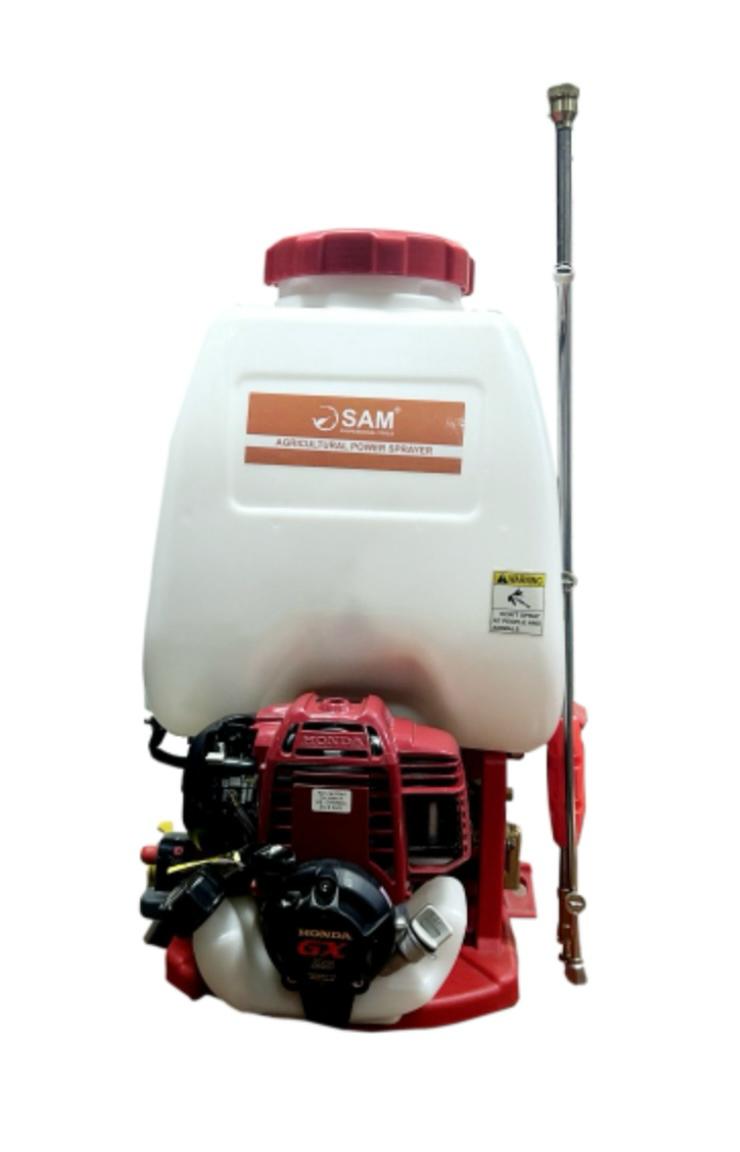 | HONDA KNAPSACK POWER SPRAYERS Engine Type: Air Cooled, 4 Stroke Engine Displacement: 25cc Tank Capacity: 20Ltr Discharge: 3-8Lpm Pressure: 15-25 Kg/cm² Weight: 10kg View product → |